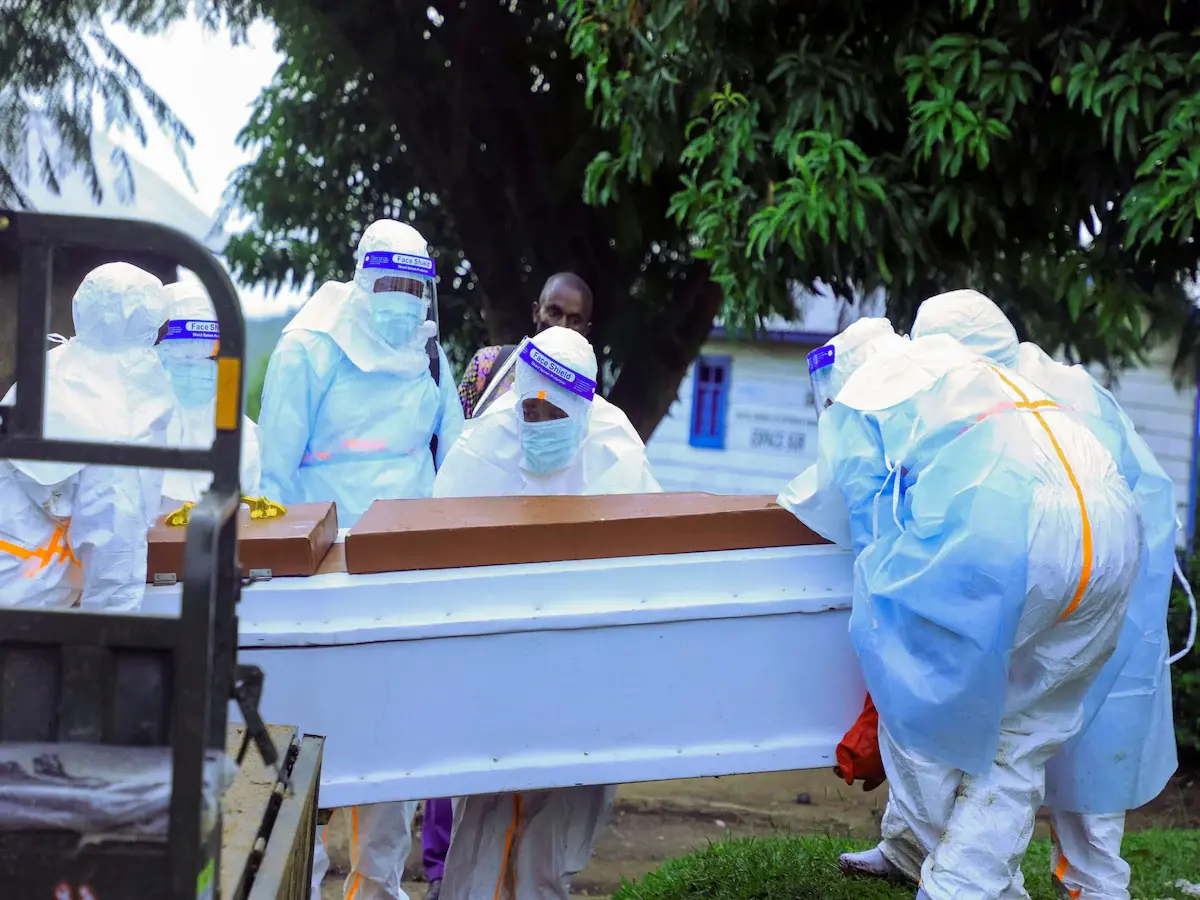
The Ebola outbreak in the Democratic Republic of the Congo (DRC) has intensified, with more than 900 suspected cases now reported and 101 infections officially confirmed, according to the World Health Organization (WHO). The Congolese government declared the outbreak on May 15, marking the country’s 17th Ebola epidemic since the deadly virus was first discovered there in 1976.
Just two days after the declaration, the WHO classified the outbreak involving the Bundibugyo strain of Ebola in both the DRC and neighboring Uganda as a public health emergency of international concern. However, the agency stopped short of labeling the situation a pandemic-level emergency.
WHO Director-General Tedros Adhanom Ghebreyesus has warned that ongoing violence and large-scale displacement in eastern Congo are significantly undermining efforts to contain the disease. In a statement posted on X, Tedros described Ituri province — the center of the outbreak — as a region deeply affected by conflict, making emergency health operations increasingly difficult.
According to the WHO chief, nearly five million people in the area are living amid insecurity, while one in four residents requires humanitarian assistance. He also noted that one in five people has been internally displaced, creating conditions that make disease surveillance and treatment efforts far more challenging.
Tedros explained that insecurity has severely disrupted contact tracing operations and delayed the early detection of infections, reducing the chances of providing supportive medical care in time. Despite these obstacles, WHO teams and partner organizations continue to work in some of the most remote and dangerous parts of Ituri, where communities are simultaneously facing multiple health threats beyond Ebola.
Health officials stress that offering broader healthcare services alongside Ebola treatment is essential for building trust among local populations and improving cooperation with response teams. Aid agencies believe that strengthening overall healthcare support will play a key role in controlling the outbreak.
The Bundibugyo strain of Ebola, first identified in Uganda in 2007, is considered relatively rare and is estimated to kill around one-third of infected patients. Scientists believe fruit bats are the natural carriers of the virus, which spreads through contact with infected animals or bodily fluids.
Currently, no approved vaccine exists for this strain. However, British researchers are reportedly accelerating work on an experimental vaccine developed using technology first employed during the Covid-19 pandemic. Early-stage clinical trials could begin within months, though experts caution that its effectiveness has yet to be proven.
While the WHO has raised the national risk level in the DRC from “high” to “very high,” it maintains that the global risk remains low.