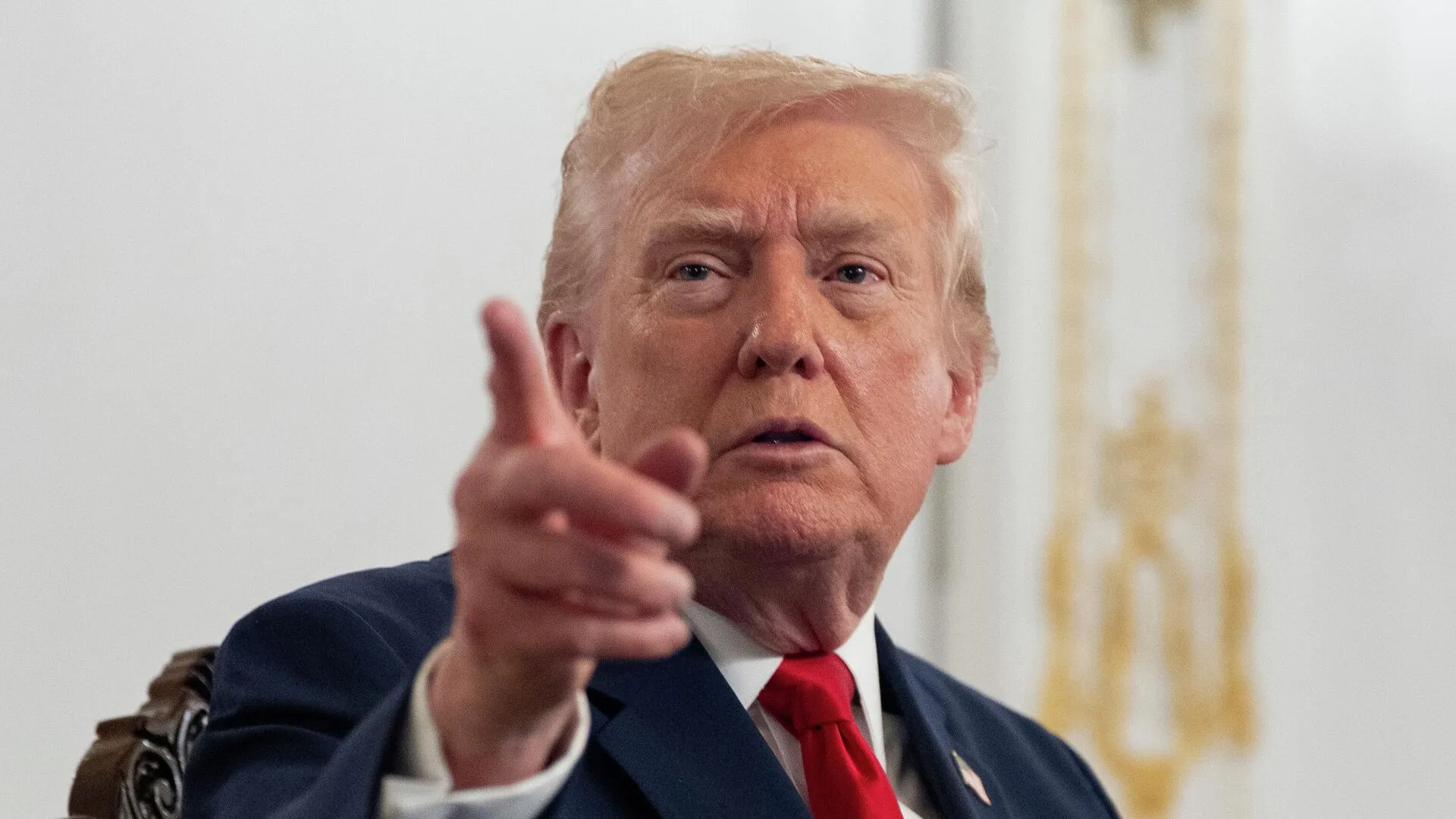
US President Donald Trump has dismissed concerns over Iran’s stockpile of highly enriched uranium, saying efforts to recover the material are “more for public relations” than an urgent security necessity. His remarks come as tensions remain high following last year’s joint US-Israeli airstrikes on Iranian nuclear facilities and ongoing deadlocked negotiations aimed at ending instability in the Middle East.
Speaking in an interview with Fox News on Thursday, Trump claimed the US has complete surveillance coverage of the bombed Iranian nuclear sites. According to him, American intelligence and military systems are monitoring the locations around the clock with multiple cameras, making it nearly impossible for Iran to secretly move or access the uranium believed to remain buried beneath the damaged facilities.
Reports estimate that roughly 400 kilograms of uranium enriched to 60% purity may still be trapped under the rubble of the targeted sites. Although this level is below weapons-grade, experts say it is technically close to the 90% enrichment needed for a nuclear weapon. Despite that concern, Trump argued the material does not currently pose a major threat because the sites are under constant observation. Still, he admitted he would “feel better” if the uranium were physically removed.
Trump also warned that military action against Iran could resume if negotiations fail. He stated that his patience with Tehran was running out and urged Iranian leaders to reach an agreement quickly. The comments reflect growing frustration in Washington and Tel Aviv over stalled diplomatic efforts to secure a broader peace arrangement after the fragile ceasefire established earlier this year.
The United States and Benjamin Netanyahu’s Israeli government continue to insist that Iran must end all uranium enrichment activities and transfer its enriched stockpile out of the country. Netanyahu recently described the removal of the uranium as a “critical mission,” arguing that the conflict cannot truly end while such material remains inside Iran.
Iran, however, maintains that its nuclear program is entirely peaceful and intended for civilian energy and scientific purposes. Iranian officials argue that giving up enrichment capabilities would damage the country’s sovereignty, technological development, and national independence. Tehran has repeatedly rejected Western demands to dismantle its nuclear infrastructure or hand over its uranium reserves to another country, including proposals involving storage in Russia.
At the same time, Iran has reportedly shown some willingness to compromise by offering to reduce the uranium’s enrichment level to lower civilian-grade standards. However, hardline voices within the Iranian government continue to issue warnings. Iranian parliamentary spokesman Ebrahim Rezaei recently stated that if Iran faces another military attack, it could increase enrichment to 90% purity — the level generally associated with nuclear weapons capability.
The dispute over Iran’s uranium stockpile remains one of the biggest obstacles preventing a long-term diplomatic settlement. While open warfare has paused for now, the future of negotiations remains uncertain as both sides continue to exchange threats and demands over Iran’s nuclear ambitions.