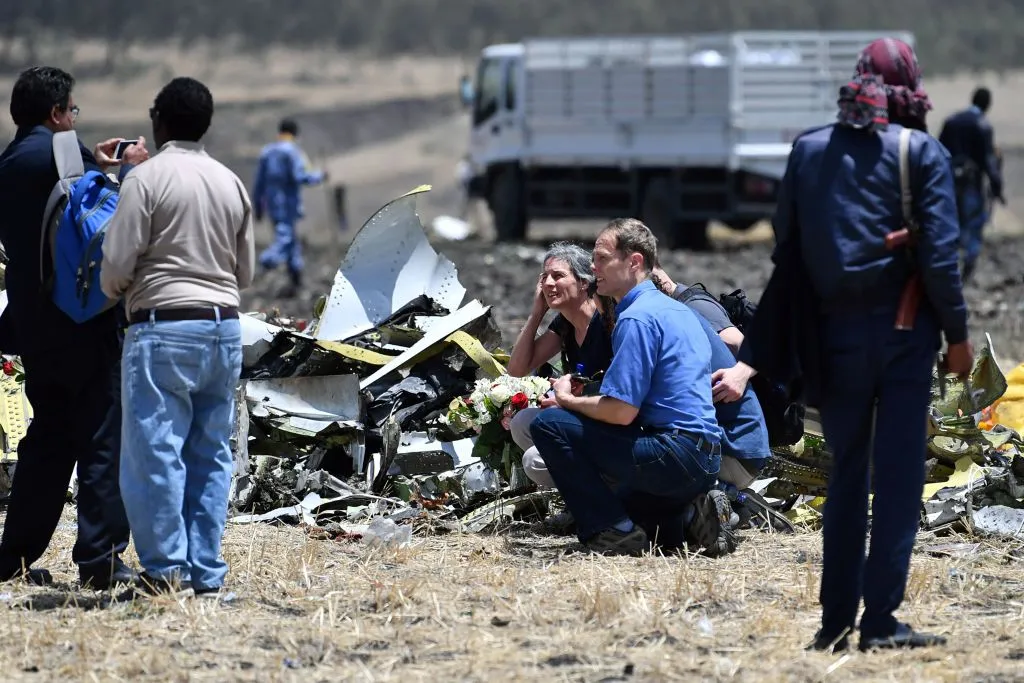
A federal jury in Chicago has ordered Boeing to pay $49.5 million in compensation to the family of a woman who died in the 2019 Ethiopian Airlines crash involving the Boeing 737 MAX aircraft. The tragic accident occurred on March 10, 2019, shortly after the plane took off from Addis Ababa, Ethiopia. All 157 passengers and crew members on board were killed in the disaster, which became one of the deadliest aviation accidents in recent history.
The victim’s family was awarded compensation after jurors concluded that Boeing’s flawed flight-control software played a major role in causing the crash. The company had already acknowledged responsibility for defects in the aircraft’s design. The Boeing 737 MAX had previously been involved in another deadly crash in October 2018, when a Lion Air flight crashed in Indonesia, killing all 189 people aboard. Following the two incidents, aviation authorities around the world grounded the aircraft for nearly 20 months.
According to attorneys representing the family of Samya Stumo, the jury awarded $21 million for the pain and suffering experienced by the victim before death, $16.5 million for the loss of companionship suffered by her relatives, and an additional $12 million for grief and emotional distress. Although Boeing accepted legal responsibility for the crash, lawyers for the Stumo family said they plan to appeal in an effort to restore punitive damage claims that were dismissed during the trial.
This was not the first major financial judgment against Boeing related to the Ethiopian Airlines tragedy. In November last year, another jury ordered the aerospace giant to pay $28.45 million to the family of Shikha Garg, another victim of the crash.
Boeing has faced numerous civil lawsuits from families of victims and has reportedly settled many of them through confidential agreements worth billions of dollars. In 2021, the company entered into a deferred prosecution agreement with US federal authorities and agreed to pay $2.5 billion after admitting it had misled the Federal Aviation Administration about flaws in the 737 MAX flight-control system.
However, legal controversy continued. In 2024, the US Department of Justice said Boeing had violated the terms of the settlement. Despite this, the department later dropped efforts to force Boeing to plead guilty to criminal fraud charges. In November last year, a federal judge in Texas approved the dismissal of the criminal case, and an appeals court upheld that decision in March 2026.