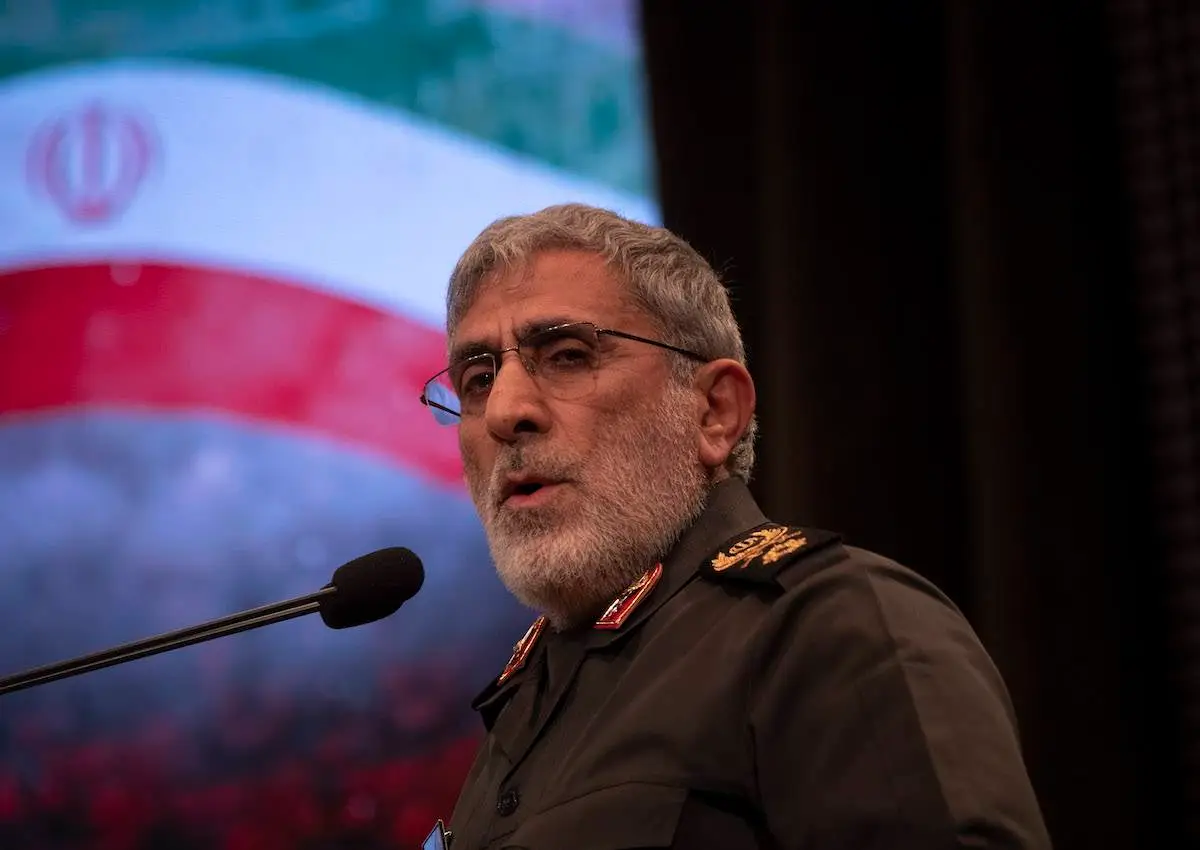
Brigadier General Esmail Qaani, commander of Iran’s Islamic Revolutionary Guard Corps (IRGC) Quds Force, has declared that a new regional security framework led by the Axis of Resistance is taking shape across key maritime routes stretching from the Strait of Hormuz to Bab el-Mandeb and from the Persian Gulf to the Red Sea.
In a statement issued on Monday, Qaani praised Yemen’s recent military operations, describing them as timely and effective responses to what he called ongoing Israeli and US actions in the region. He said the operation demonstrated the growing coordination, experience, and unity among resistance groups operating across West Asia.
According to Qaani, the emerging security network is intended to strengthen cooperation among resistance movements and increase their ability to respond collectively to regional developments. He warned that any future actions by Israel or the United States in strategic waterways would be met with a coordinated reaction from allied groups across multiple fronts.
“The Resistance Front is acting with wisdom and strength,” Qaani stated, adding that additional forces could join the effort if circumstances require. He stressed that resistance groups remain prepared to respond to what they view as threats against regional security and stability.
The remarks come amid heightened tensions in the Middle East, with Iran-aligned groups expressing support for Palestinians in Gaza and criticizing Israeli military operations in the region. Resistance factions have also voiced solidarity with Lebanon and Iran, accusing Israel and the United States of escalating regional instability.
Qaani’s comments followed a missile operation launched by Yemen’s Ansarullah movement on Monday. According to reports, a ballistic missile was fired toward Israeli-controlled territory, triggering air raid sirens across several areas and disrupting activity at Ben Gurion International Airport.
Israeli authorities confirmed that security procedures were activated following the launch, resulting in temporary interruptions to air traffic. The incident highlighted the continuing reach of Yemen’s military capabilities and its ability to affect regional transportation routes.
Ansarullah officials have repeatedly stated that their operations are part of a broader campaign in support of Palestinians and other groups aligned with the Axis of Resistance. Military spokesman Yahya Saree has previously described such actions as part of ongoing efforts to challenge what the movement sees as Israeli and US aggression in the region.
The latest developments underscore the increasingly interconnected nature of regional conflicts and the growing role of resistance groups in shaping security dynamics across the Middle East.