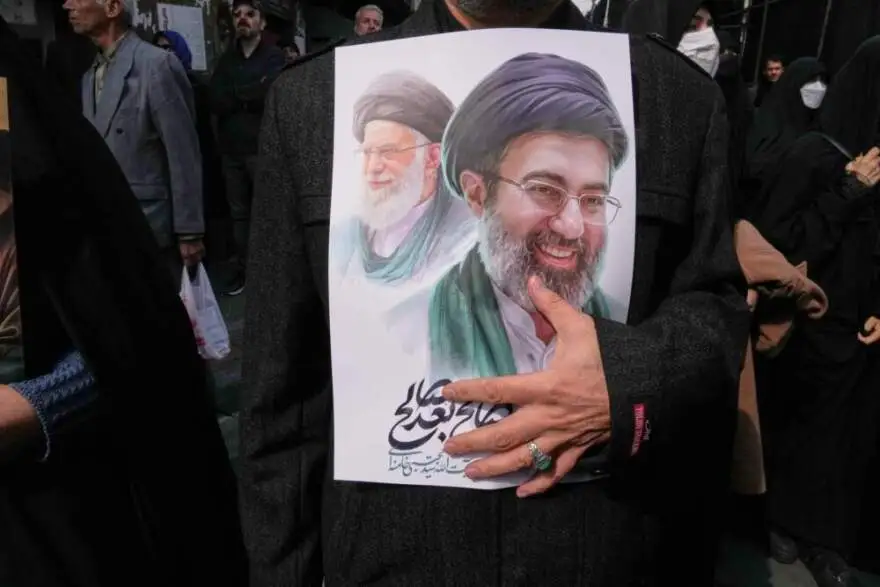
Iran's top security authorities have vowed to retaliate for the killing of the country's supreme leader, saying those responsible will face consequences "at the right time," as preparations continue for nationwide funeral ceremonies.
In a statement issued on Wednesday, Mohammad Baqer Zolqadr, secretary of Iran's Supreme National Security Council, said the investigation into the killing remained active and warned that those responsible, as well as those who ordered the attack, would face what he described as "just punishment" in the near future. He characterized the late leader's death as a lasting symbol of Iran's national security doctrine.
Zolqadr was appointed to the post in March following the death of his predecessor, according to Iranian state media.
In a separate statement, Iran's Guardian Council condemned the attack, calling it an attempt to weaken the resolve of the Iranian people. The council said the leader's death would instead strengthen resistance and reinforce national unity.
The council described the upcoming funeral as a defining moment for the country, urging citizens to participate in large numbers. It said the ceremonies would demonstrate public support for the Islamic Republic and reaffirm commitment to the ideals of the Islamic Revolution.
The statement also expressed support for Iran's new supreme leader, Ayatollah Seyyed Mojtaba Khamenei, describing the funeral as an opportunity for the nation to renew its allegiance to the country's leadership. According to the council, a strong public turnout would send a message that Iran remains united despite recent events.
Funeral ceremonies for Ayatollah Seyyed Ali Khamenei, who Iranian authorities say was killed in a US-Israeli strike targeting his residence in Tehran on February 28, are scheduled to begin on Thursday and continue for five days across Tehran, Qom and Mashhad.
The Guardian Council also thanked the Iranian public and the country's armed forces for what it described as their steadfast response during the conflict, saying their actions had strengthened national solidarity in the face of external pressure.