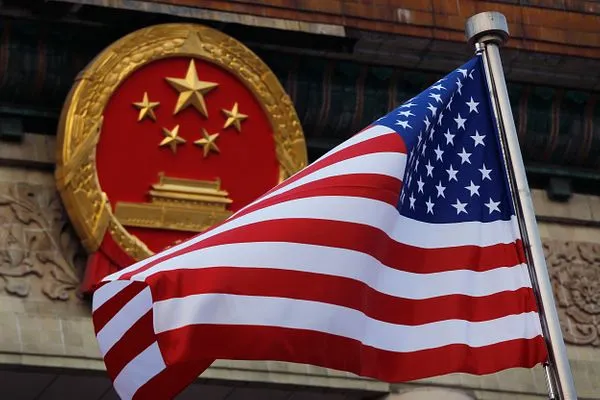
Recent developments in US-China relations suggest that Washington may be pursuing a more pragmatic approach toward Beijing, one focused on strategic balance rather than outright confrontation.
While attention at this year’s Shangri-La Dialogue security summit centered on the absence of China’s top military officials, a more significant event occurred behind the scenes. Military representatives from the United States and China met in Hawaii under the framework of the Military Maritime Consultative Agreement to discuss maritime safety, crisis management, and ways to reduce the risk of military incidents. The talks reflected ongoing efforts by both countries to maintain communication channels despite growing strategic competition.
Observers say the foreign policy approach emerging under President Donald Trump’s second administration differs from both the post-Cold War liberal internationalist model and the idea of launching a new Cold War against China. Instead, it appears increasingly based on traditional power politics, deterrence, and the pursuit of national interests.
This shift was highlighted during remarks by US Defense Secretary Pete Hegseth at the Shangri-La Dialogue. Hegseth argued that Washington is moving away from what he described as a globalist foreign policy framework and toward one grounded in military strength, national security, and strategic realism.
The new approach also seeks to redefine relationships with US allies. For decades, many American partners relied heavily on US security guarantees while maintaining relatively limited defense capabilities. Washington is now encouraging countries such as Japan, South Korea, Australia, the Philippines, and India to take a greater role in regional security.
Supporters of the strategy argue that it reflects the realities of a changing world. Unlike the unipolar era that followed the Cold War, today’s international system includes several major powers with growing influence. China’s economic and military rise, along with the emergence of other regional players, has created a more multipolar environment.
Rather than attempting to restore unquestioned dominance, the United States appears focused on maintaining a favorable balance of power in the Indo-Pacific. Officials argue that stronger regional partners can help ensure stability and prevent any single country from dominating the region.
China remains a central concern in US strategic planning, but recent American messaging has been less confrontational than in previous years. While Washington continues to express concerns about Beijing’s military expansion, officials have also emphasized dialogue, crisis-management mechanisms, and stable bilateral relations.
Notably, highly sensitive issues such as Taiwan received less emphasis in recent public statements, suggesting an effort to manage disagreements without escalating tensions unnecessarily.
Despite these signals, Beijing remains skeptical. Chinese leaders often view US-backed military modernization efforts among regional allies as attempts to contain China’s rise. As a result, mistrust is likely to persist.
Nevertheless, the evolving US strategy appears aimed at maintaining stability through balance rather than pursuing dominance, potentially offering a more sustainable framework for long-term coexistence between the world’s two largest powers.