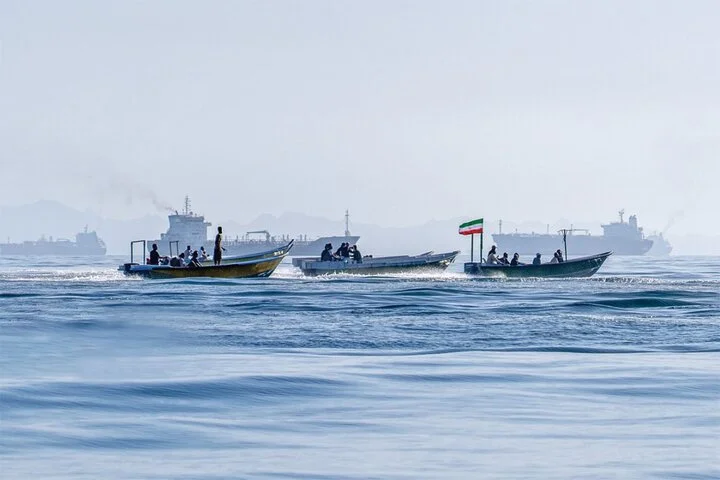
Iran has introduced new transit regulations for vessels passing through the strategically important Strait of Hormuz, requiring ships to submit transit requests at least 48 hours before entering the waterway. The announcement was made on Friday by Iran's Persian Gulf Strait Authority (PGSA), the agency responsible for managing maritime traffic through the narrow shipping corridor.
In a statement posted on social media platform X, the PGSA said that only vessels complying with the new advance-notification requirement would receive prompt clearance for passage. The authority described the measure as part of a revised transit framework aimed at improving traffic management and maritime security in one of the world's busiest energy shipping routes.
The agency also announced that transit-related fees would be waived for the next 60 days under a memorandum of understanding (MoU) between Iran and the United States. During this period, Tehran will assume the costs associated with maritime security, safety services, environmental protection and insurance for qualifying vessels.
The new rules come as Washington and Tehran begin a fresh round of diplomatic engagement. US President Donald Trump said he expects Iran to reach a permanent agreement within the 60-day negotiation period that officially began on Thursday. Speaking at Joint Base Andrews in Maryland, Trump warned that failure to reach a deal could lead to consequences, although he expressed confidence that an agreement would ultimately be achieved.
A planned US-Iran signing ceremony in Switzerland, originally scheduled for Friday, was cancelled. However, according to Axios, citing a US official, Trump's special envoy Steve Witkoff and Iranian Foreign Minister Seyed Abbas Araghchi are traveling to Switzerland to begin the first round of discussions on a possible nuclear agreement.
The diplomatic developments follow heightened military tensions in the Middle East. After recent clashes between Israel and Lebanon disrupted the planned US-Iran meeting, the two neighboring countries agreed to a new ceasefire that took effect on Friday afternoon.
Despite the ceasefire, two Lebanese security sources claimed Israel carried out around a dozen airstrikes shortly after the truce was announced, though no further strikes were reported after 5 p.m. local time. An Israeli military official denied the claims, while a Reuters journalist in northern Israel reported witnessing airstrikes inside Lebanon around 4:50 p.m.