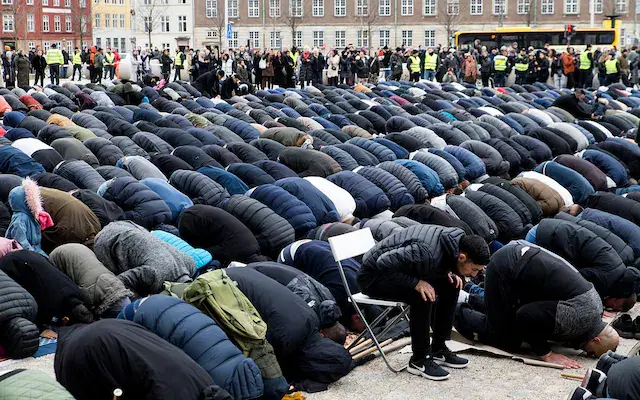
Denmark is considering introducing a nationwide ban on the Islamic call to prayer, known as the Adhan, as part of the government's broader efforts to curb what it describes as the "Islamization" of the country. Immigration Minister Morten Bodskov said the call to prayer "has no place" in Denmark and confirmed that authorities will reopen an investigation into whether it can be legally prohibited.
Speaking to Danish news agency Ritzau on Wednesday, Bodskov argued that the Adhan should not be broadcast across Danish communities. "The call to prayer should not be heard over Danish rooftops," he said, adding that people should never feel as though they have "ended up in a suburb of Islamabad" while walking through Denmark.
The Adhan is recited five times a day to invite Muslims to prayer and, in many countries, is broadcast through loudspeakers mounted on mosques or minarets. While some Danish municipalities, including Copenhagen, already limit outdoor broadcasts under local noise regulations, Bodskov believes Islamic practices continue to occupy too much public space.
Denmark has a population of around six million people, including an estimated 270,000 Muslims—roughly five percent of the population—and around 100 mosques nationwide.
The proposal comes as Prime Minister Mette Frederiksen begins her third consecutive term in office after the Social Democrats recorded their poorest election performance in more than a century in March. The election reflected growing public concerns over the cost of living, pressure on welfare services and immigration.
At the same time, the right-wing Danish People's Party significantly increased its support after campaigning for zero net Muslim migration. In response, Frederiksen's government has adopted a tougher stance on immigration and the visibility of Islam in public life. Recent proposals include extending Denmark's face-veil ban to schools and universities and removing prayer rooms from educational institutions.
Previous governments led by Frederiksen also introduced stricter asylum policies, implemented controversial "ghetto" laws targeting neighborhoods with large migrant populations, and approved measures allowing authorities to relocate residents from areas considered insufficiently integrated.
Supporters of the proposed Adhan ban argue it would help preserve Denmark's secular public sphere. Critics, however, say it unfairly targets Muslims and could conflict with constitutional protections guaranteeing freedom of religion and public worship.